..... FROM SEPTEMBER 1939, UNTIL AMERICA ENTERED THE WAR IN 1941, THIS SMALL ISLAND NATION STOOD ALONE AS THE LAST BASTION OF FREEDOM AND DEMOCRACY IN EUROPE, NOR DID THEY WAVER AGAINST THE FULL MIGHT OF HITLER FASCISM AS THE NAZI LUFTWAFFE RELENTLESSLY BLITZED OUR CITIES KILLING MANY CIVILIANS. A DEDICATED WAR MEMORIAL SERVES TO REMIND US ALL OF THE HEROIC SACRIFICES MADE IN THE DEFENCE OF LIBERTY AND JUSTICE, TO ALWAYS REMAIN VIGILANT IN SAFEGUARDING THIS HARD WON FREEDOM, NATIONS OF THE WORLD HAVE A MORAL DUTY TO WORK TOGETHER IN BUILDING A LASTING PEACE, RESPECTING ALL LIFE AS SACROSANCT, PROTECTING THE ENVIRONMENT, AND ABOVE ALL, WORKING TO CREATE A HEALTHY, HAPPY, PROSPEROUS AND SUSTAINABLE FUTURE ON EARTH FOR THE GENERATIONS YET TO COME .....
This website is dedicated to Britain's WW2 Civilians whose spirit never wavered while under relentless enemy attacks from the air.
THE CAMPAIGN THAT MADE HISTORY:
CONCEDED
The Public enquiry conceded that an area of land in Wapping called 'Hermitage' was appropriate for the construction of a 'Civilians Remembered' War Memorial including a quiet waterfront garden at its Western end. It stated that the current proposal for a housing development by 'Berkeley Homes', being supported by the 'London Docklands Development Corporation' at the time, was not suitable for this last remaining "significant waterfront site on the River Thames".
ENVIRONMENT FIRST 'Civilians Remembered' had campaigned for several years to save this last bit of remaining land in Wapping for a WW2 Civilians memorial, this area was chosen because it had received some of the heaviest bombing during the war, many locals people also felt that yet another housing development on prime land was inappropriate for this last available site in Wapping. Local communities felt that this space should be used for their Community not for a further luxury housing development on the Thames with added underground Car parking. Growing traffic pollution from vehicles had resulted in an alarming increase of asthma in local School Children, instead, there was strong support to create a Civilians WW2 memorial to remember those who had lost their lives during the blitz, it was felt this would be far more apt than any new luxury housing development.
SUPPORT ACROSS THE COUNTRY
The Civilians Remembered campaign won huge support across the Country, many elderly survivors of the War were still living, their contribution during 1939-45 had almost been forgotten, and this campaign had aroused passions like no other, people wanted to see a war Memorial erected soon, it was very clear that this Campaign was becoming a big Public issue across the Country, many hearts and minds had been touched by it at all levels of Public life including Royalty, Her Majesty, the Queen Mother having experienced the war first hand after Buckingham Palace was bombed, pledged her support for a civilians war Memorial to be erected in the heart of London, she was later to unveil a new plaque to them at St Paul's Cathedral.
SUSTAINED BLITZ
Adolf Hitler vowed to burn this great City down to the ground, sending waves of enemy bombers to drop their deadly cargo by day and night. East London became the front line in the Battle for Britain, yet the spirit of its people never wavered, on the contrary, despite exposure to relentless enemy air attacks, their defiance grew stronger with each passing day, Her Majesty the Queen Mother was proud to identify herself with its people after Buckingham Palace was bombed when she said: "Now I can look the 'East End' straight in the eye".
BATTLE OF BRITAIN
From September 7th 1940 to May 1941 East London was exposed to, perhaps, one of the most sustained periods of aerial bombing on record, constant enemy air raids took a heavy toll on the local population, but the Luftwaffe also began to sustain heavy losses as young 'Battle of Britain' pilots took to the skies to meet the enemy head on. Hitler's losses compelled him to rethink his strategy, on May 10th.1941, after Hitler had launched his heaviest night raid of the war on London which killed and injured over 3000 civilians, he turned his attention to the Soviet Union, Daylight bombing began to decrease over London although the constant nightly raids on the City continued.
On one particular night in 1943 an exploding shell from a nearby Ack Ack gun caused panic on the stairway entrance into Bethnal Green Tube air-raid shelter when someone shouted 'bombs are dropping', people ran forward to get into the shelter and started to fall on top of each another, that terrible night 173 were crushed or suffocated to death
As his Luftwaffe Pilot losses grew Hitler started sending pilotless 'V1' flying bombs, known as 'doodlebugs', these continued to wreak havoc on London civilians, soon to be followed by the 'V2', the first ever ballistic missile, they came silently without warning, their explosive power was devastating. On One early morning as people slept in their beds, Hughes Mansions, a block of flats in Vallence Road, East London, was suddenly demolished by a V2 rocket, leaving a huge crater, it had arrived without warning, tragically killing almost 200 people just seven weeks before the war ended. Peoples War Archives
SURVIVORS
The elderly still have vivid memories of the war, they will never forget, it's as though it happened yesterday, they can tell many unique stories about the blitz. They recall the wailing air-raid sirens, the drone of enemy bombers, the sky filled with searchlights, thuds of heavy ack ack, and then bombs screeching to earth and then the explosions, many escaped nightly to underground air-raid shelters, and in the morning, after the 'all clear' sounded, walked through streets of smouldering rubble and desolation in the aftermath of the air-raids. people were to find their homes and shops destroyed, and incendiary fires still burning, "as kids we took many risks without realizing the danger involved, we picked up bits of shrapnel and kicked spent incendiary bombs off pavements, it was amazing that any of us avoided serious injury, after an air-raid if you managed to get home in one piece, you might be stopped by an ARP Warden on your own doorstep because of an un-exploded bomb or land mine in your street".
DANTES INFERNO:
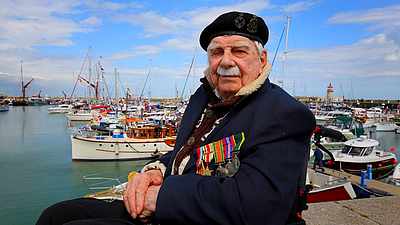
Those civilians on National duty had stoutly defended the Thames with distinction as Hitler's bombs rained down on them. One such Pensioner, a wartime fireman, said: "I will never forget December 29th 1940 that particular night the Luftwaffe dropped thousands of incendiary bombs on London, Hitler had vowed to burn London to the ground. We were engulfed in flames as firemen fought countless fires, their hoses running bone dry, it was becoming a hopeless task" he continued, "each time we turned around another fire had started, the heat was unbearable, the night sky turned crimson red, we were working in a 'Dante's inferno', and yet by some miracle, although surrounded by a ring of burning fires, St Paul's Cathedral survived."
A SURVIVOR'S PLEA TO HER MAJESTY
he continued "The spirit, bravery and fortitude shown by Britain's embattled Civilian population during the first two years of War made victory possible, it turned the tide against Hitler, a 'Civilians Remembered Medal' in their honour is long overdue, King George V1 awarded a George Cross to brave little Malta, yet Britain's WW2 civilians are yet to be honoured for their outstanding contribution to Victory, The Royals shared their ordeal, both Windsor castle and Buckingham Palace were bombed, so "Please your Majesty there's still time to honour Britain's WW2 civilians, why not emulate your Father and award a Royal medal to "Britain's finest Generation"?, "I hope she's listening, just like brave little Malta, the heroic achievement of Britain's Civilians in WW2 must never be forgotten..." his eyes glinted in the sunset along the Thames
A WARNING FROM HISTORY:
This unsung hero had survived to tell his tale but he warned "people today must be sure to never again repeat mistakes of the past, our generation was prepared not to tolerate Hitler's racial prejudice and religious intolerance, we stood firm because we were united by our belief in freedom and democracy, only then were we able to defeat Nazi Fascism in a bitter war, The sacrifices made by the British people and their allies in helping to liberate Europe and the World from Hitler's tyranny must never be forgotten, this City bravely stood up to defend the right of all peoples to Freedom, Liberty and Democracy, no matter what their race, creed, or colour, that is why this great City of London became a beacon of hope for the oppressed and persecuted.".
CIVILIANS REMEMBERED MEMORIAL
A Civilians remembered War Memorial and quiet Riverside Garden' in Wapping serves the future as well as the past, remembering the living as well as the dead, its location is just a short walk from the Tower of London, attracting many Visitors, it helps to focus attention on the extraordinary sacrifices made by London's ordinary Citizens in defence of their right to Freedom, Liberty, and Justice, reminding younger generations that democracy was not gifted but hard won and should always be guarded vigilantly lest we forget. Winston Churchill had personally experienced the painful cost of war when he uttered his famous words 'jaw jaw is better than war war', he understood that making peace was a far greater political achievement than making war.
Britain's Civilians Inspired by Sir Winston Churchill displayed outstanding courage in facing the might of Hitler, had Britain capitulated after the fall of Dunkirk there would have been no "Battle of Britain" or base from which to launch the Allied liberation of Europe, what then? As Winston Churcill said: 'this was their finest hour' ....
Watch this historic Capra video 'Why we fight the Battle of Britain'
"Never in the field of human conflict was so much owed by so many to so few"